
Jewish Festivals: The Sacred Rhythm of Jewish Life
A journey through time, tradition, and collective memory that has sustained Jewish identity for millennia.
The Sacred Cycle of Jewish Time
Jewish festivals mark the rhythm of Jewish life, offering moments of remembrance, celebration, and renewal throughout the year. More than religious observances, these sacred times embody historical memory, theological significance, and cultural traditions that have sustained Jewish identity through centuries of diaspora and challenge.
From the solemn reflections of Yom Kippur to the jubilant celebrations of Purim, from the freedom narrative of Passover to the agricultural abundance of Sukkot, Jewish festivals connect modern Jews to their ancestors, their homeland, and to each other—creating an unbroken chain of tradition that spans generations and geography.
The Jewish Calendar: A Different Way of Marking Time
The Jewish calendar is a sophisticated lunisolar system that harmonizes the cycles of the moon and sun, creating a unique rhythm for Jewish religious life. This calendar not only serves practical agricultural functions but also creates a sacred pattern of time that shapes Jewish consciousness.
High Holidays
Days of Awe
Rosh Hashanah and Yom Kippur represent the most solemn period of the Jewish year—ten days of introspection, repentance, and spiritual renewal that determine the course of the coming year.
Pilgrimage Festivals
Shalosh Regalim
Passover, Shavuot, and Sukkot originally required pilgrimage to Jerusalem’s Temple. They combine agricultural celebration with historical commemoration of the Exodus and Torah revelation.
Post-Biblical
Later Celebrations
Hanukkah commemorates the Maccabean victory and Temple rededication. Purim celebrates deliverance from Haman’s plot in Persia. Both demonstrate Jewish resilience against persecution.
Minor Festivals
Seasonal Markers
Tu BiShvat celebrates nature’s renewal, Lag BaOmer marks a break in mourning, and Tisha B’Av commemorates the destruction of both Temples and other tragedies in Jewish history.
Passover: Liberation and Homeland
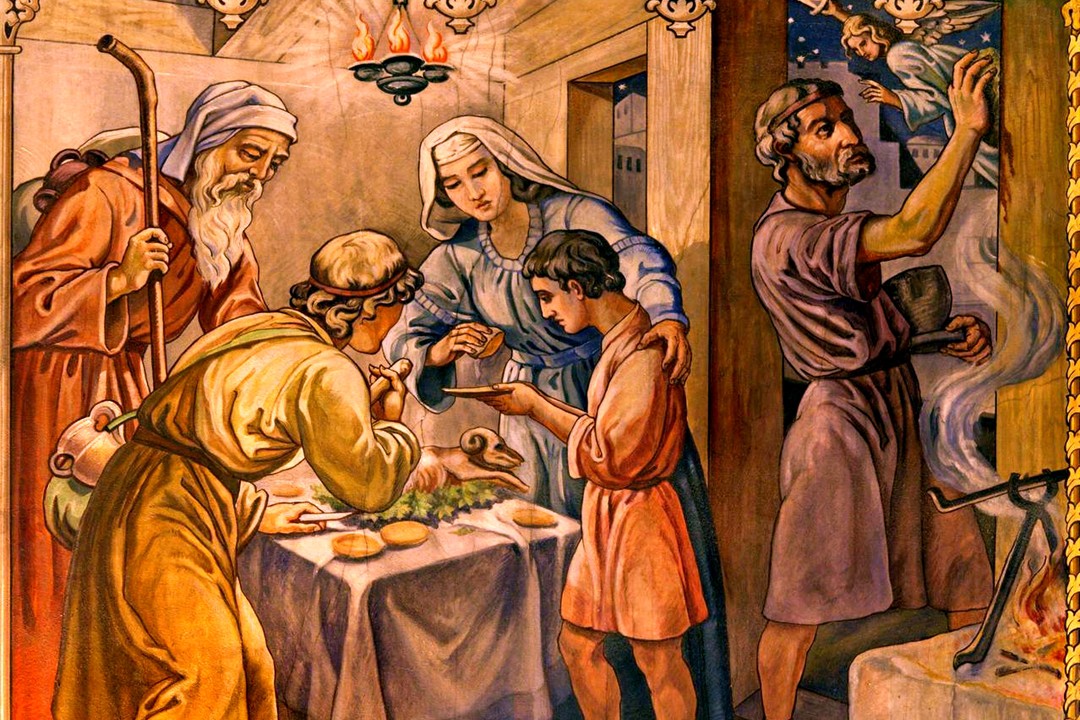
Of all Jewish festivals, Passover perhaps most powerfully expresses the connection between Jewish historical memory, spiritual aspiration, and homeland connection. This spring celebration commemorates not just freedom from slavery but the journey toward national identity in the Promised Land.
Passover is fundamentally a story of national liberation that embodies the Jewish longing for Zion. The biblical Exodus narrative recounts not only freedom from slavery in Egypt but a journey toward the Promised Land of Israel—underscoring that the goal of redemption was homeland restoration, not merely relief from oppression.
“In every generation, each person must see themselves as if they personally went forth from Egypt.”
— The Passover Haggadah
The Seder ritual concludes with the declaration “Next Year in Jerusalem” (L’Shanah Haba’ah B’Yerushalayim), a phrase that has sustained Jewish hope through centuries of exile. Throughout two millennia of diaspora, Passover kept alive the hope of returning to the ancestral homeland.
Zionist Connection
The themes of exile and redemption in Passover deeply informed Zionist thought, inspiring the movement for a Jewish homeland.
Historical Significance
The founding of Israel in 1948 was widely seen as a fulfillment of Passover’s promise—a nation reclaiming its ancestral soil.
Festivals as Vehicles of Jewish Identity
Preserving Historical Memory
Jewish festivals function as powerful vehicles for transmitting historical memory from generation to generation. Each holiday becomes a living classroom where stories, triumphs, and struggles are recounted and re-experienced through rituals, foods, and prayers.
Connection to the Land
Many Jewish festivals are intrinsically linked to the Land of Israel. The Three Pilgrimage Festivals originally required travel to Jerusalem’s Temple, and their agricultural aspects reflect Israel’s specific seasons and harvests.
Cultural Continuity
Jewish festivals have preserved cultural practices, foods, music, and art forms through centuries of dispersal. Special melodies, recipes, and customs create a sense of unity among diverse Jewish communities worldwide.
Adaptability & Resilience
Jewish festivals demonstrate remarkable adaptability, evolving to remain relevant across different contexts. From ancient agricultural celebrations to modern feminist Seders, observances have been reimagined while maintaining essential character.
“More than Jews have kept Shabbat and the festivals, Shabbat and the festivals have kept the Jews.”
— Ahad Ha’am
The Enduring Power of Sacred Time
Throughout history, Jewish festivals have served as anchors of identity and continuity during periods of persecution and displacement. They have created a portable homeland—a way for Jews to carry their cultural heritage and collective memory wherever they went. Today, Jewish festivals continue to provide spiritual meaning, historical connection, and cultural identity to Jews worldwide.
Sources and Further Reading
de Lange, Nicholas. Judaism. Oxford University Press, 2003. • Eisenberg, Ronald L. The JPS Guide to Jewish Traditions. Jewish Publication Society, 2004. • Goodman, Philip. The Passover Anthology. Jewish Publication Society, 1993. • Heschel, Abraham Joshua. The Sabbath: Its Meaning for Modern Man. Farrar, Straus and Giroux, 2005. • Telushkin, Joseph. Jewish Literacy. HarperCollins, 2008.