
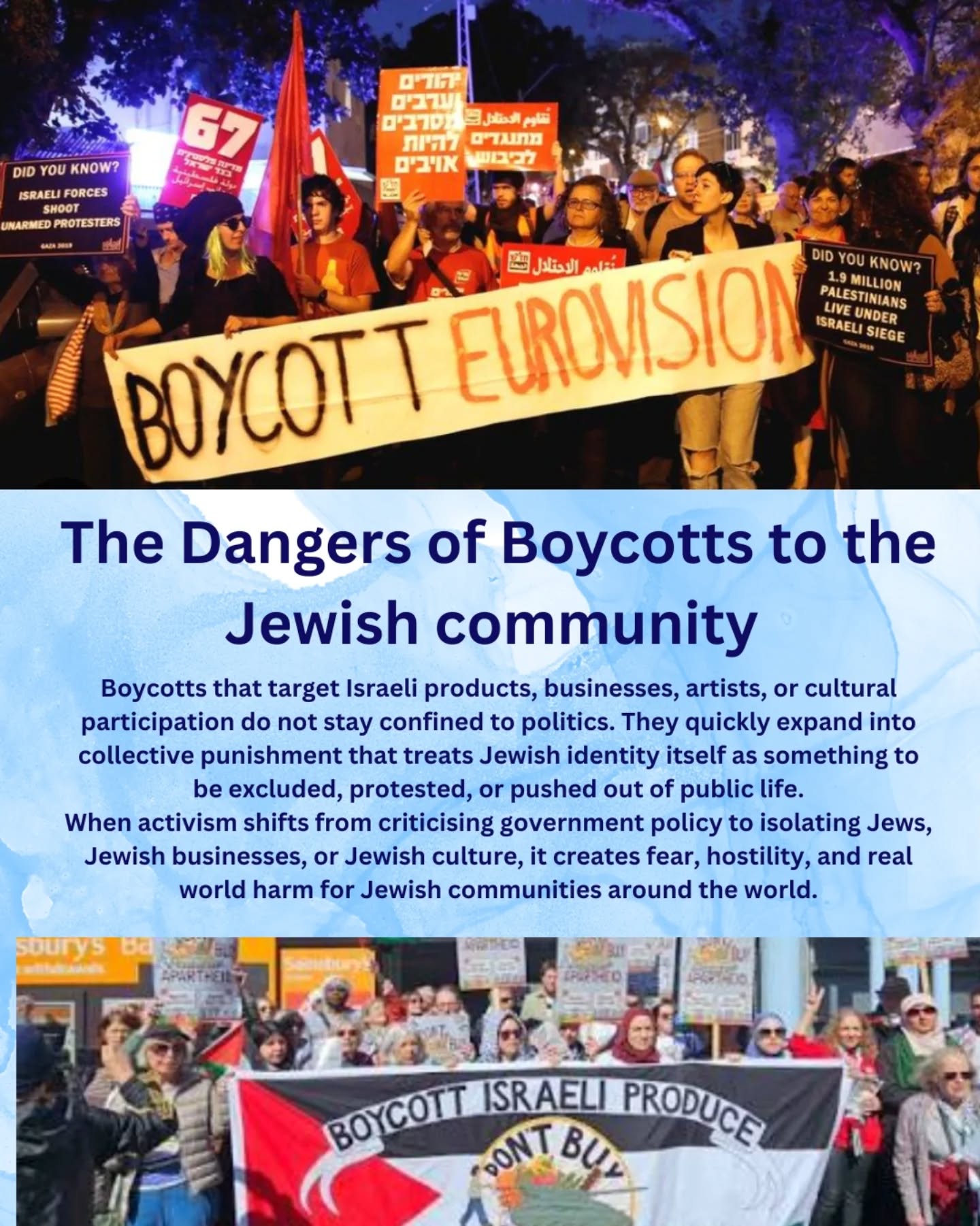
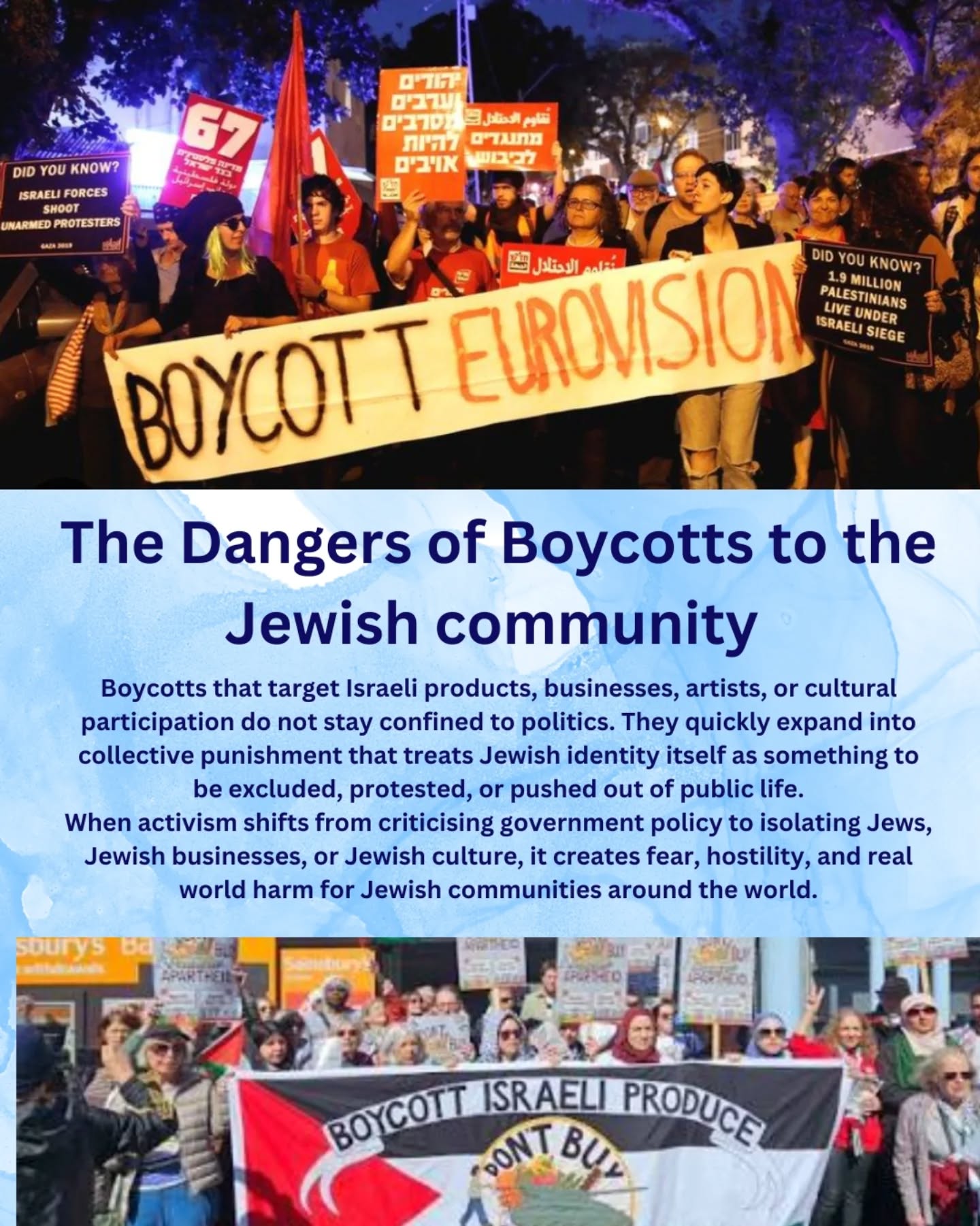
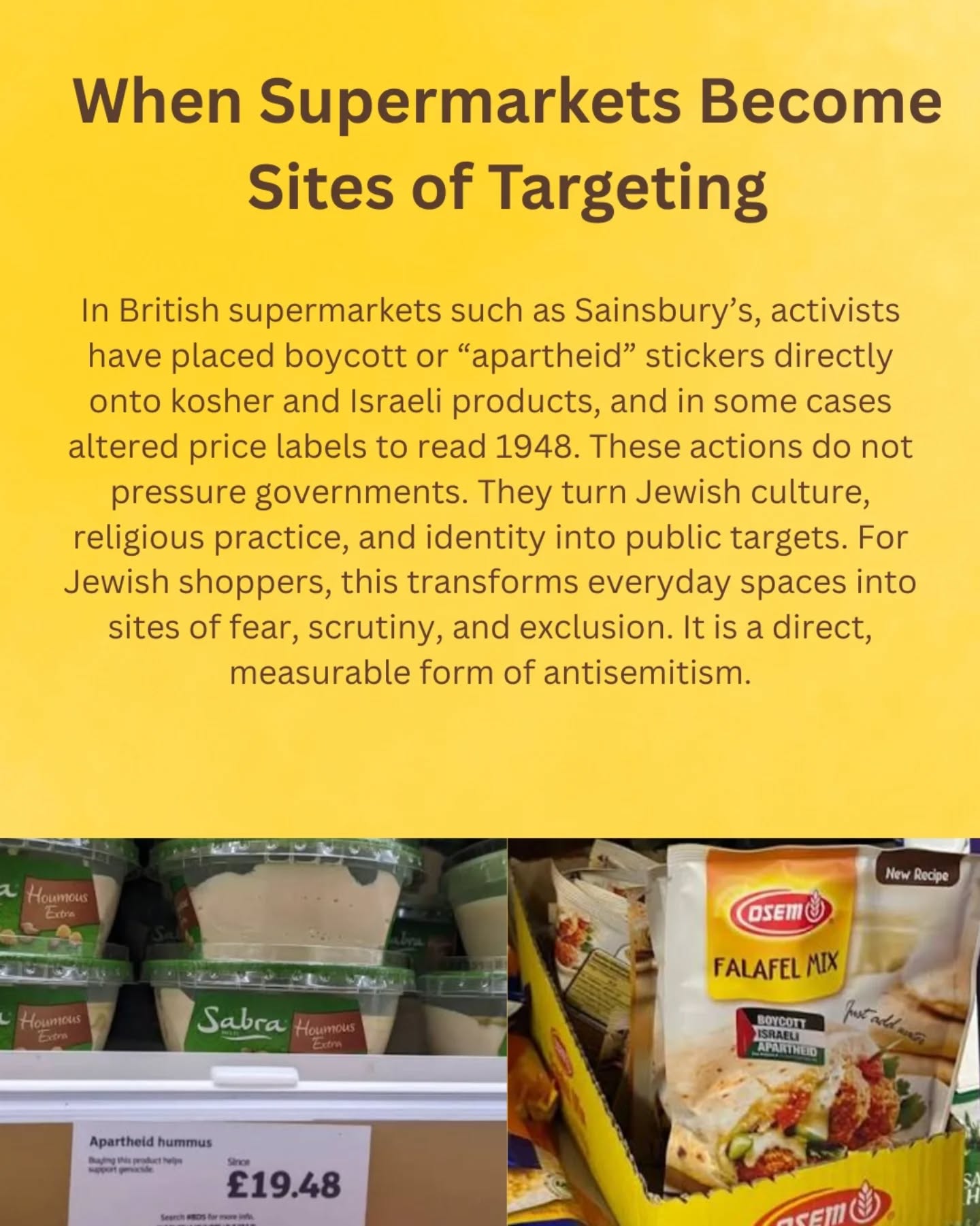
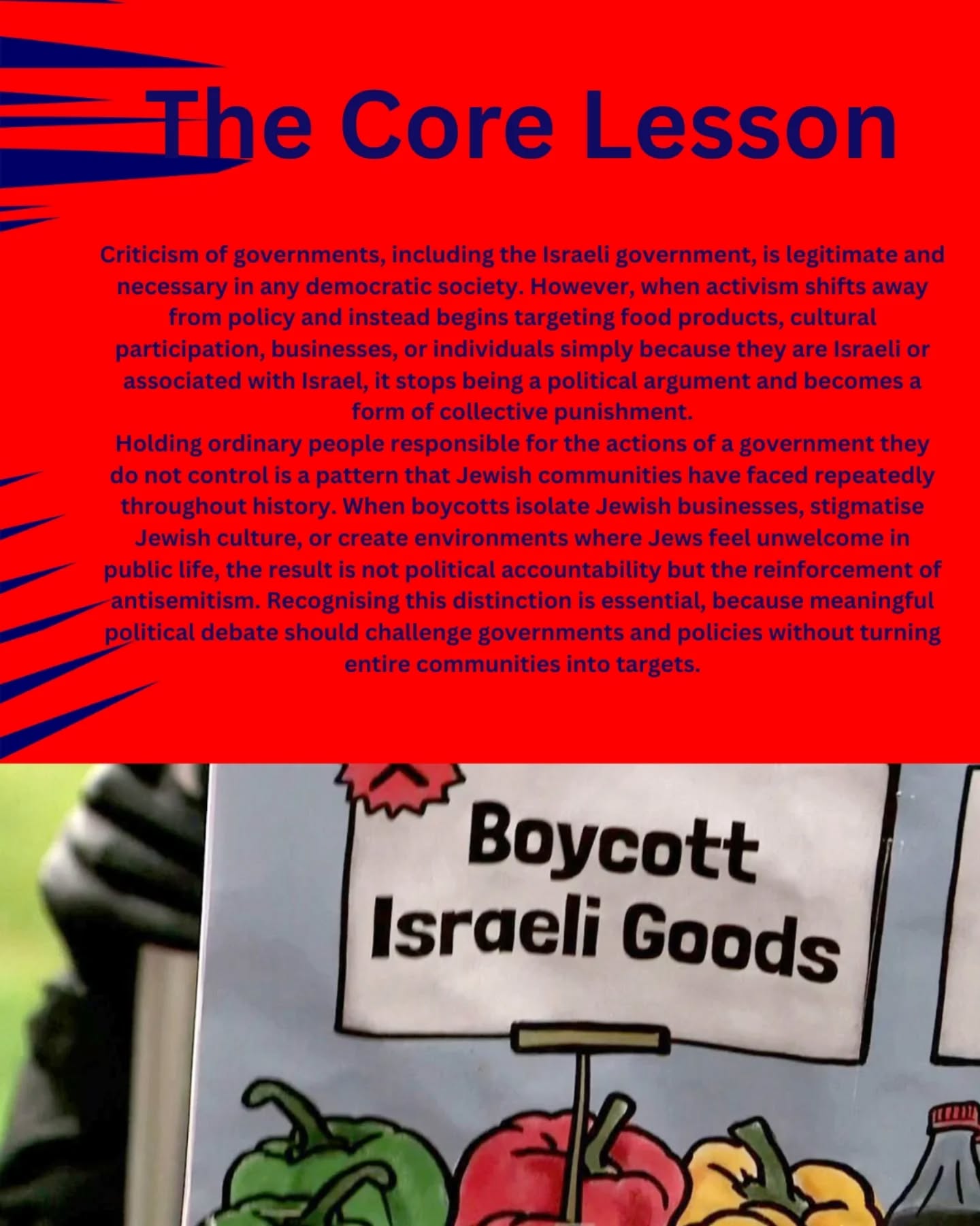
Boycotts that target goods, businesses, and culture associated with the Jewish community are not harmless acts of protest. They don’t stay focused on governments or policies. They spill over into real life, where Jewish people are singled out, excluded, and made to feel unsafe in spaces that should be ordinary and apolitical.
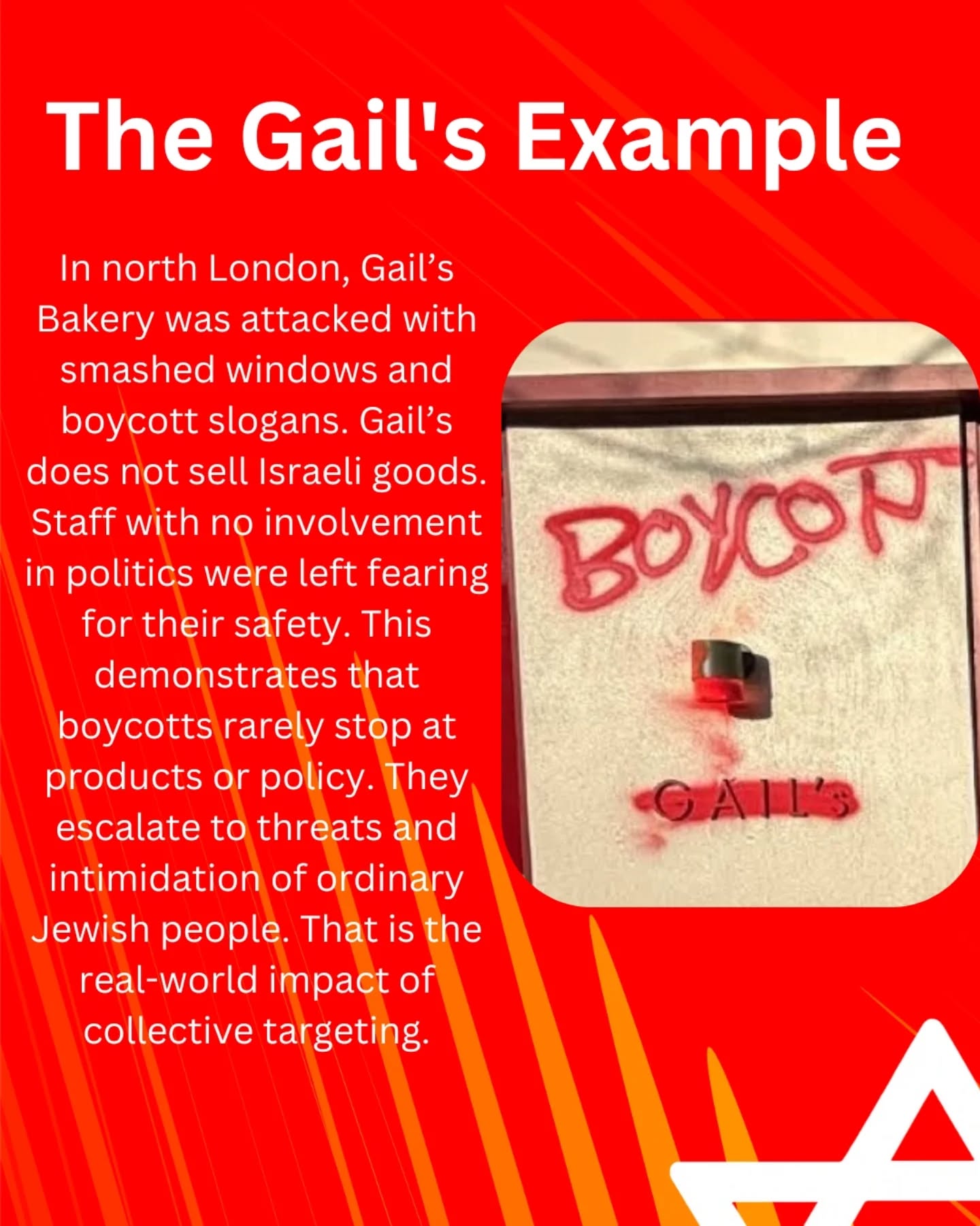
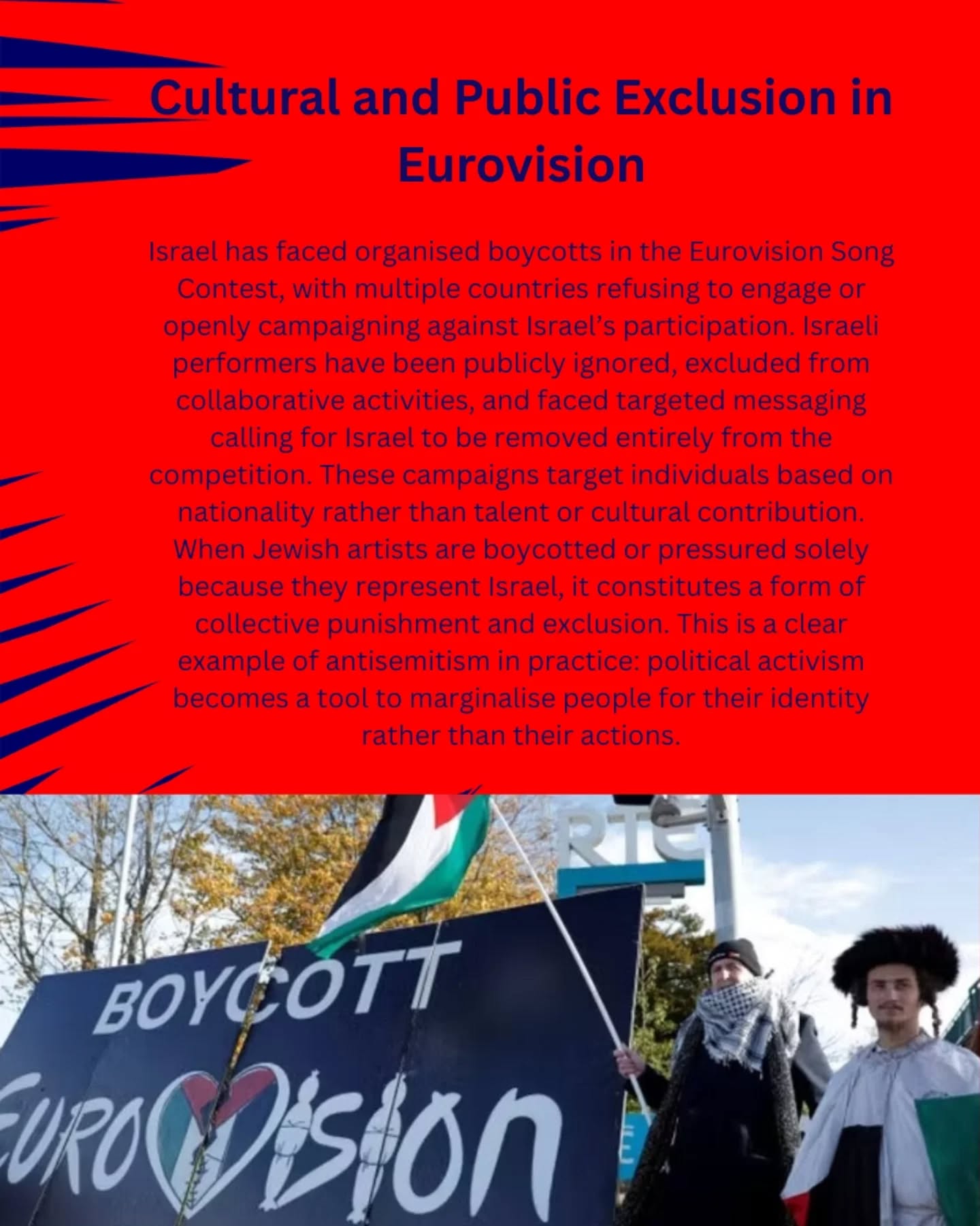
When kosher products are labelled and targeted in supermarkets, when businesses with no connection to Israel are attacked, and when artists are excluded simply for being Israeli, the message is clear. This is no longer about politics. It is about people.
You can oppose a government. You can criticise policies. That is your right. But when that criticism turns into collective punishment, double standards, and the targeting of Jewish identity, it crosses a line into antisemitism.
This matters because the impact is real. It affects how safe Jewish people feel in public, at work, in shops, and in cultural spaces. It creates fear, isolation, and hostility in everyday life.
If we care about human rights, then that standard must be applied consistently and without turning entire communities into targets.