There is a day in Jewish time when the air changes.
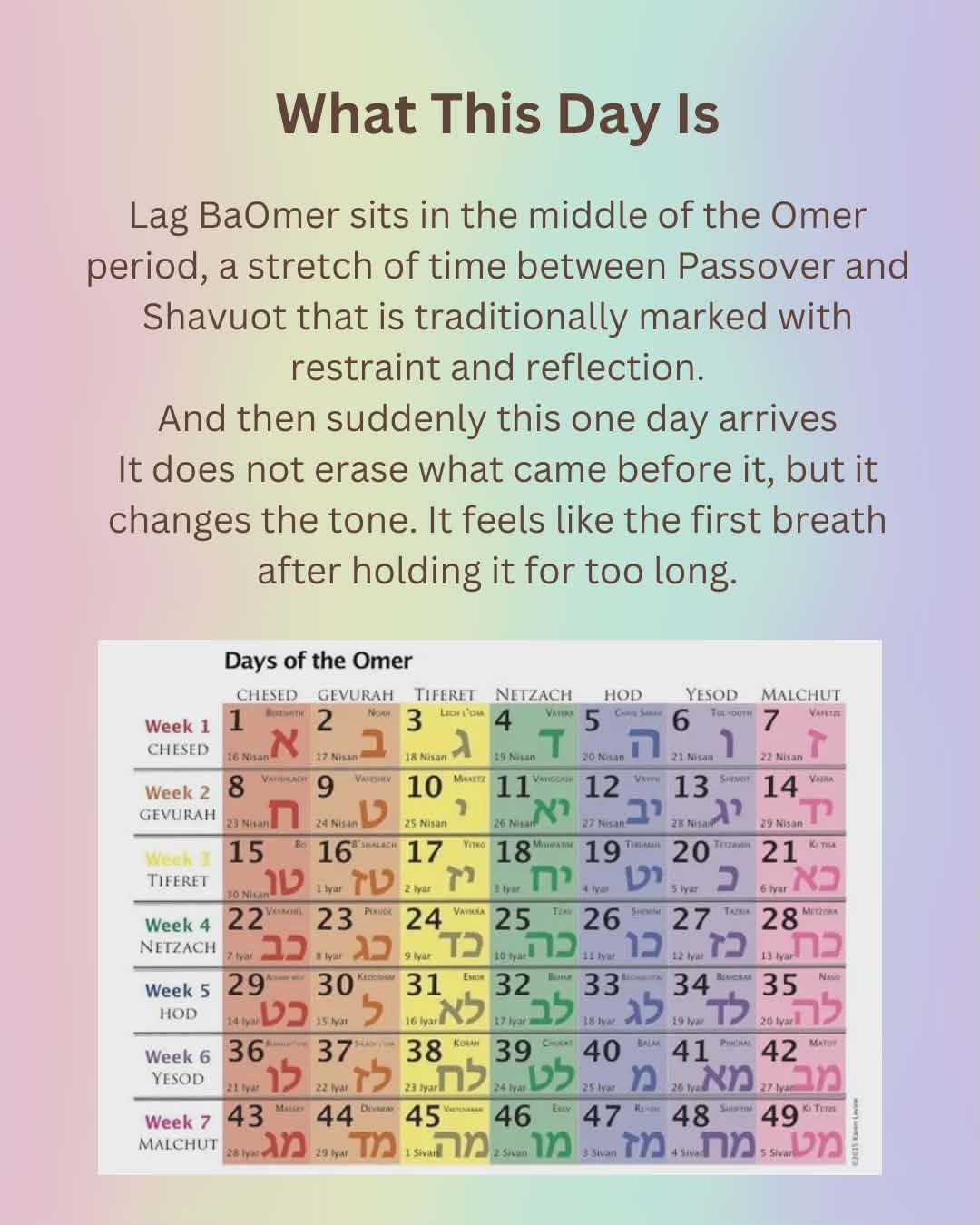
For thirty-two days before it, the Omer is counted in a register of restraint. No weddings, haircuts or live music. Tradition holds that a plague swept through the students of Rabbi Akiva during this stretch, and the tragedy finally relented on the 33rd day.
The mystic Shimon bar Yochai, remembered on this date, left his students with a passing they described less as sorrow than as completion. A life of teaching that kept burning after he was gone.
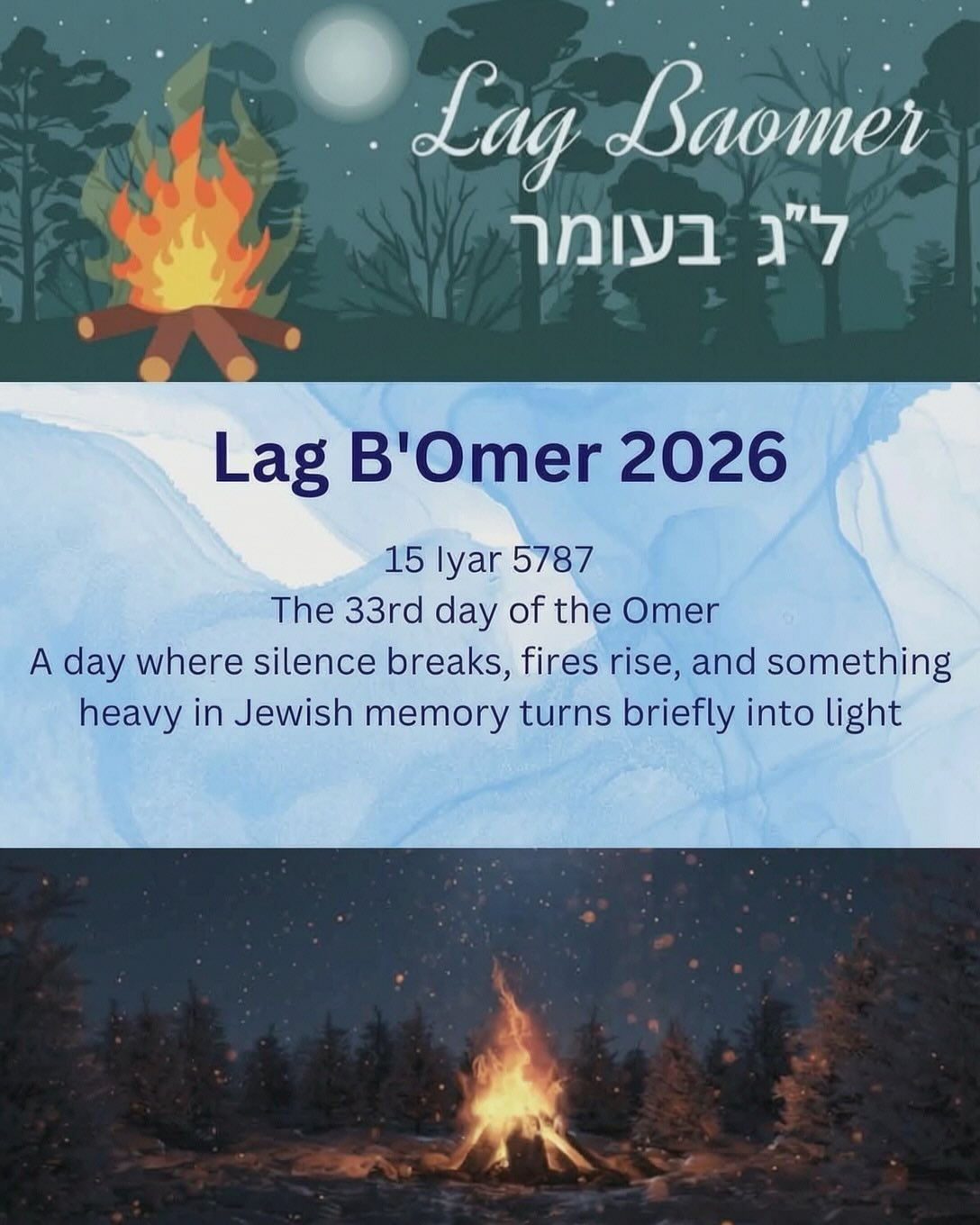
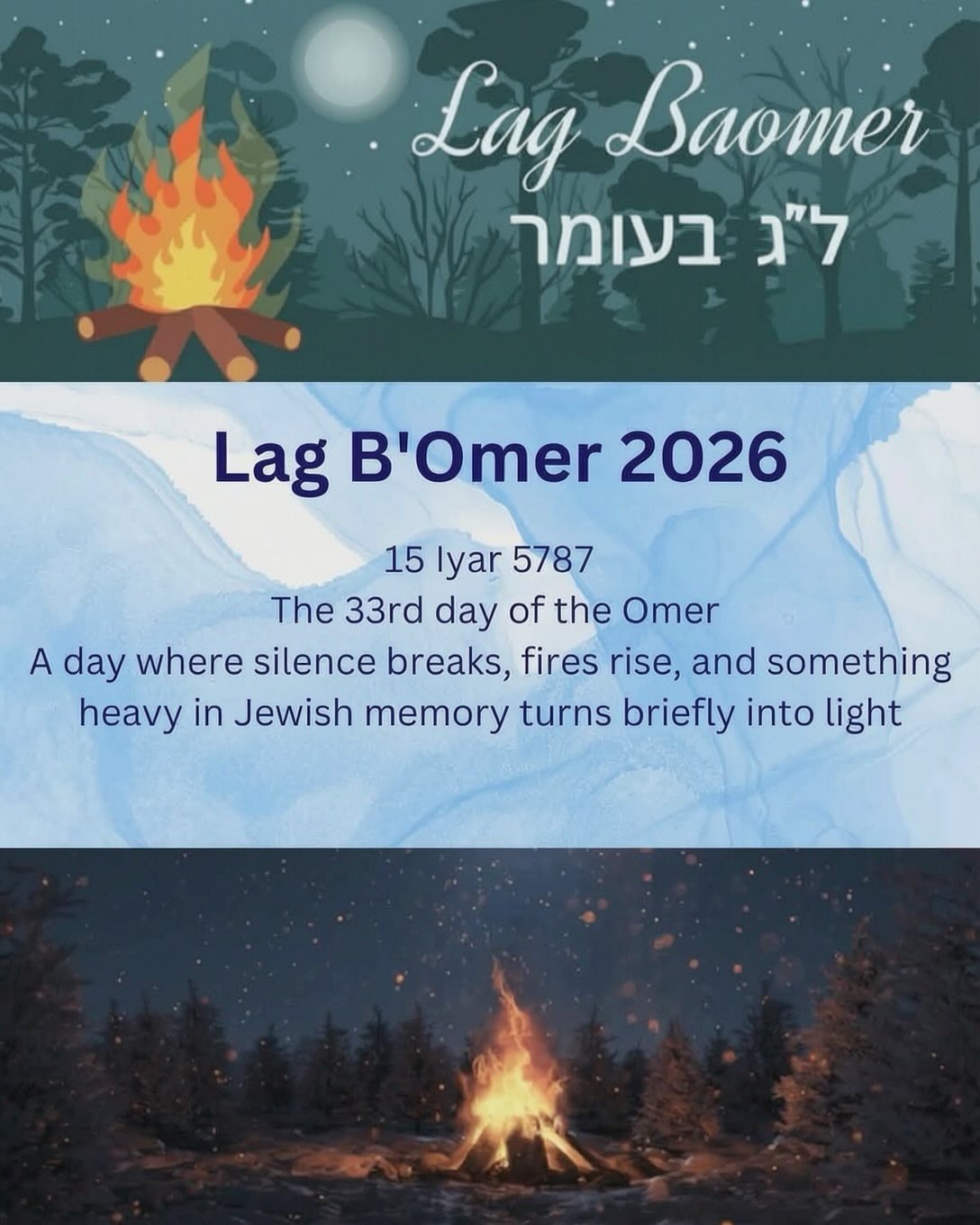
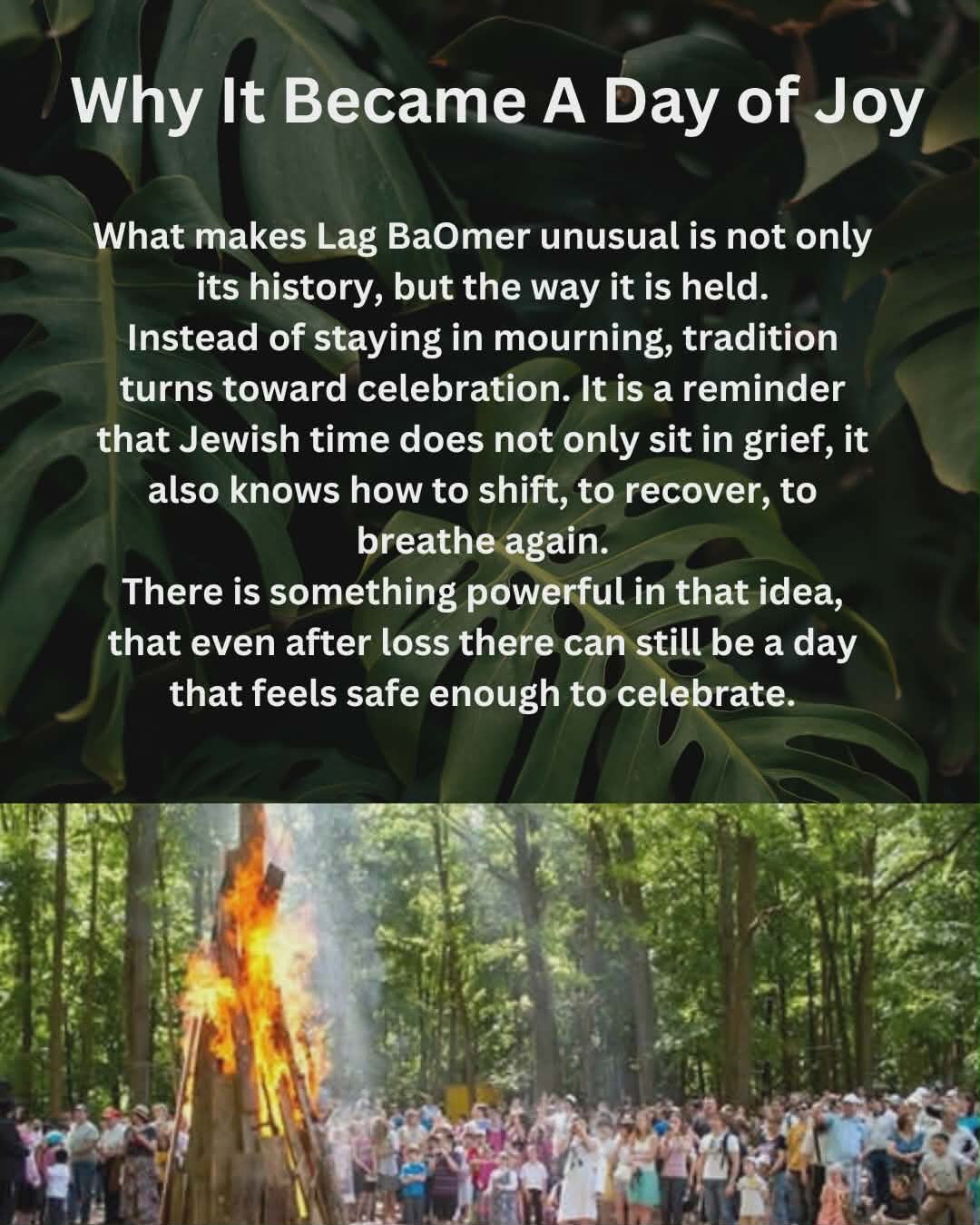
That is why, on Lag B’Omer, fires are lit. In streets and fields and schoolyards.
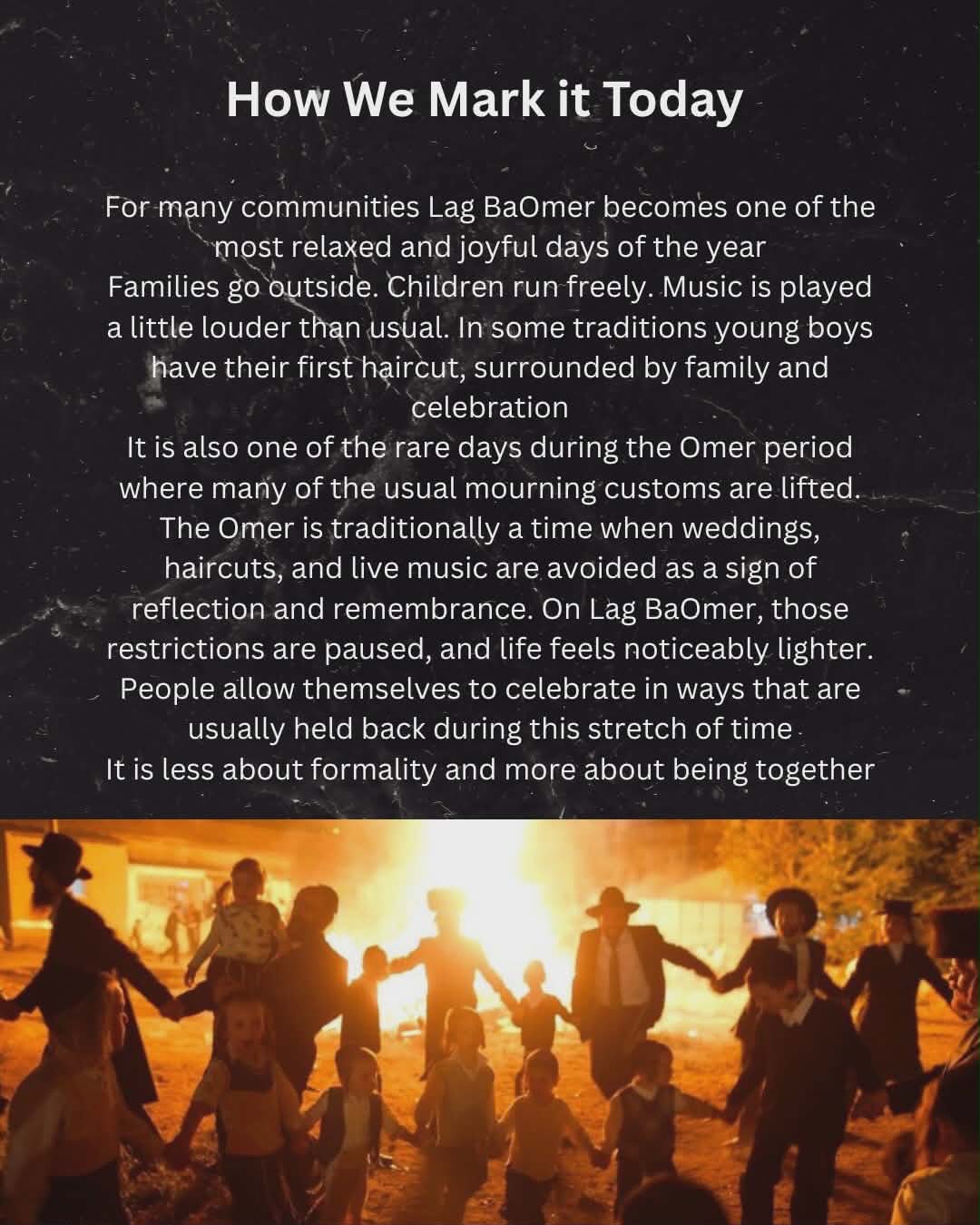
In some communities, three-year-old boys are brought for their first haircut, surrounded by family. Music returns, Children play and People stay outside until late.
It is one of the most informal days in the Jewish calendar, and one of the most quietly profound. A day that says memory does not have to live only in sadness, that grief and light can sit in the same week, the same hour, the same fire.
Even in difficult years, Lag BaOmer comes to remind us that Jewish time knows how to catch its breath and recover.
Lag BaOmer Sameach