
When ethnicity is overlooked in healthcare, important risks, experiences and needs can be overlooked too.
Jewish identity is often treated as if it were only a religion. That is understandable, because Judaism is a religion, and for many Jews faith is central to their lives. But it is also incomplete. Jewish identity can include ancestry, ethnicity, culture, language, family history, shared peoplehood, religious practice, secular belonging, and a connection to a long historical community.
That distinction matters in healthcare. Health systems collect ethnicity data because different communities can face different risks, barriers and outcomes. If Jewish identity is recorded only as religion, or flattened into broad categories such as “White British”, “White Other” or “Any other ethnic group”, the NHS can miss information that may be clinically relevant and socially important.
This is not about special treatment. It is about accurate representation, safer prevention, better research and fairer healthcare.
Jewish Identity Is More Than a Faith Category
When most people hear the word “Jewish”, they think of religion. That makes sense. Judaism is a religion, and Jewish religious life has shaped Jewish communities for thousands of years.
But a person can be secular, never attend synagogue, not believe in God, and still be Jewish. A person can be Jewish by family, ancestry, ethnicity, culture or peoplehood. A person may be Jewish and religious, Jewish and non-religious, Jewish by conversion, Jewish by one side of the family, or Jewish in a mixed-heritage household.
This is why Jewish identity is often described as ethnoreligious. It does not fit neatly into the modern institutional habit of separating “religion” from “ethnicity” as though they are always unrelated categories.
Unlike many world religions, Judaism did not begin as a belief system spread across unrelated populations. The Jewish people developed as a people with a religion, culture, language, law, homeland connection, shared memory and communal identity. Over time, Jewish communities spread across Europe, North Africa, the Middle East and beyond, but many retained a sense of belonging to the same people.
That does not mean every Jewish person has the same ancestry, appearance, politics, religious practice or health profile. Jewish communities are diverse. But it does mean that treating Jewish identity as religion only can erase something real.
A healthcare system does not need to define who is Jewish. It does need to let people describe themselves accurately, and it needs to understand when Jewish ancestry, Jewish ethnicity or Jewish community identity may matter for care.
Why Ethnicity Data Matters in Healthcare
The NHS does not ask about ethnicity as a matter of curiosity. Ethnicity data is used to understand health inequalities, identify barriers to care, plan services, analyse outcomes, improve research and ensure that communities are not being missed.
NHS England’s Ethnicity Recording Improvement Plan explains that accurate ethnicity data supports organisations to identify and act on inequalities. NHS England’s wider statement on health inequalities also says NHS bodies should use data and community insight to understand differences in access, experience and outcomes.
When a community is not accurately recorded, three things happen.
ONS Census 2021 shows the problem clearly. In England and Wales, 287,360 people identified as Jewish through religion, ethnic group or both. This included 16,030 people who identified as Jewish through ethnic group only, and 52,165 who identified through both religion and ethnic group. In other words, a religion-only approach does not capture the whole Jewish population.
If the NHS records a Jewish patient only as “White”, or only as a religion, it may lose the very information needed to understand community-specific risks, access gaps or experiences.
What Genetics Does, and Does Not, Prove
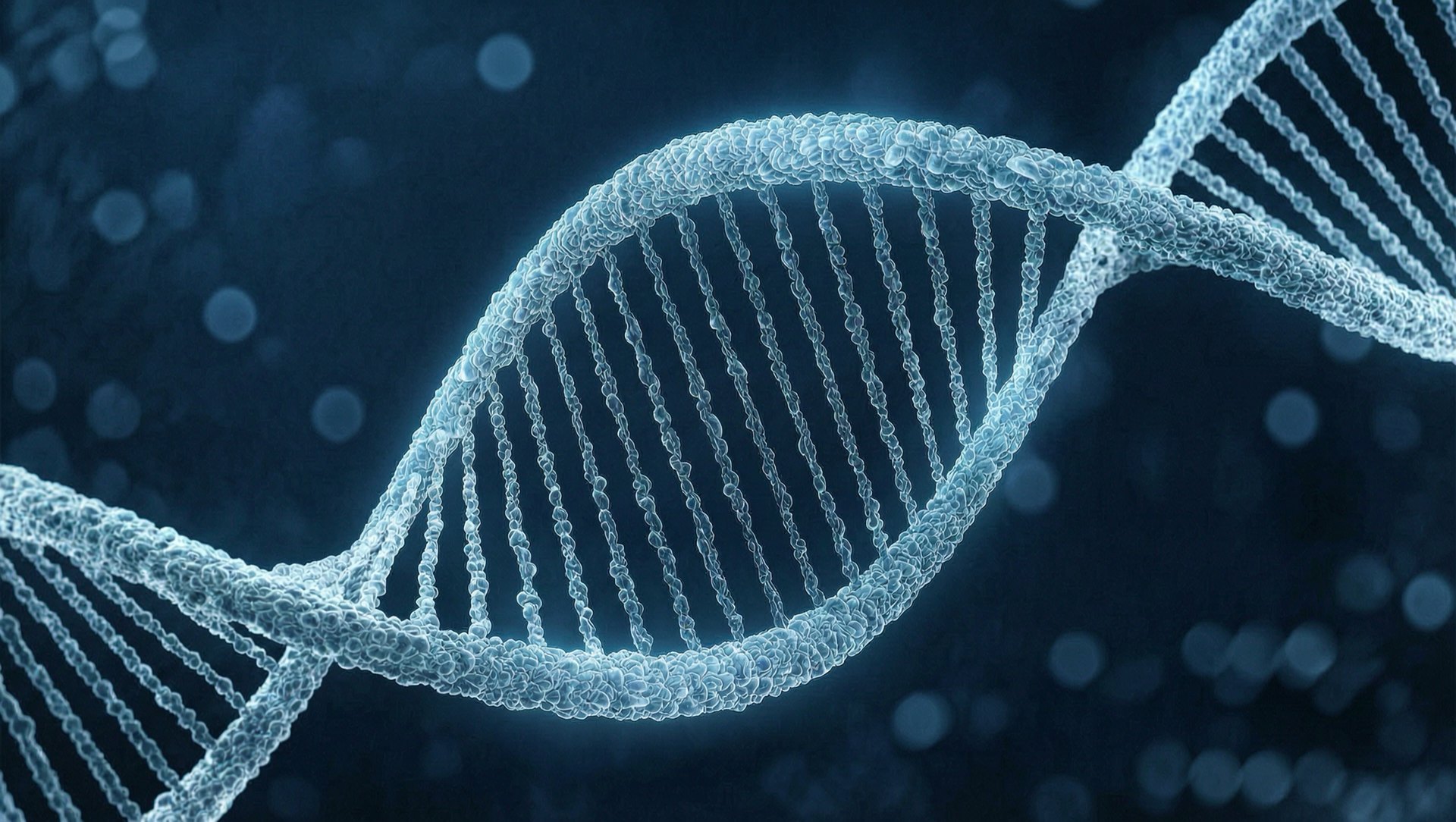
Genetics is one reason Jewish identity cannot be understood as religion alone. Religions do not normally leave shared ancestral patterns. People may share a faith while coming from completely different family origins.
Jewish history is different. Genetic studies have found that many Jewish populations, including Ashkenazi, Sephardi and Mizrahi communities, show shared ancestry and connections with ancient Levantine and Middle Eastern populations, alongside later mixture with surrounding populations. This is consistent with the historical reality of Jewish communities spreading across different regions while retaining forms of endogamy and communal continuity.
But this point must be handled carefully. Genetics should not be used to reduce Jewish identity to biology. Not all Jewish communities have the same genetic profile. Converts are fully Jewish without necessarily having Jewish ancestry. Mixed-heritage Jews may have more than one ancestral background. Some Jewish communities have genetic histories shaped strongly by local populations.
The careful point
Jewish genetics does not mean “all Jews are the same”. It means ancestry can be medically relevant, and Jewish identity cannot be dismissed as belief alone. The correct healthcare approach is respectful self-identification, good family history, and appropriate access to genetic counselling where clinically relevant.
This matters because modern medicine already uses ancestry and family history. Clinicians routinely consider whether a person has a family background associated with particular inherited conditions. That is not stereotyping when it is done carefully, voluntarily and in context. It is part of prevention.
BRCA: The clearest life-saving example
The clearest example is BRCA1 and BRCA2. These genes help repair damaged DNA. People who inherit harmful changes in BRCA1 or BRCA2 have increased risks of several cancers, including breast, ovarian, prostate and pancreatic cancer.
The National Cancer Institute estimates that more than 60% of women who inherit a harmful BRCA1 or BRCA2 change will develop breast cancer during their lifetime, compared with about 13% of women in the general population. It also estimates ovarian cancer lifetime risk at around 39% to 58% for BRCA1 and 13% to 29% for BRCA2.
Anyone can carry a harmful BRCA variant. But the likelihood is higher in some populations because of founder effects, where particular variants become more common in a population over generations. Among people of Ashkenazi Jewish descent, three founder variants in BRCA1 and BRCA2 are especially well known.
BRCA at a glance
Ashkenazi Jewish ancestry: commonly estimated around 1 in 40 for harmful BRCA1/2 variants.
Sephardi Jewish ancestry: UK Jewish genetics materials commonly cite around 1 in 140.
General population: estimates vary by source and comparator, commonly around 1 in 250 to 1 in 400.
This is not abstract. BRCA status can affect screening, prevention, family cascade testing and treatment. A person who knows they carry a harmful BRCA variant may be offered enhanced screening, risk-reducing options, genetic counselling and advice for relatives. If cancer develops, BRCA status may also affect treatment decisions, including targeted therapies in some cases.
UK healthcare already recognises this. NICE familial breast cancer guidance says that, when taking family history for referral decisions, clinicians should consider Jewish ancestry because women with Jewish ancestry are around 5 to 10 times more likely to carry BRCA1 or BRCA2 mutations than women in non-Jewish populations.
NHS England also ran the NHS Jewish BRCA Testing Programme. Eligibility was based on being in England, aged 18 or over, and having at least one Jewish grandparent, regardless of faith or religious practice. That is important. The programme was not based on whether someone attended synagogue. It was based on ancestry.
In January 2025, NHS England reported that more than 25,000 free saliva test kits had been requested and delivered, around 11,000 tests had been processed, and 235 people had tested positive for a BRCA gene mutation. As of 23 June 2026, the programme website says it is closed to new registrations while NHS England works on a longer-term service anticipated in 2027.
The BRCA programme proves the central point: Jewish ancestry can be clinically relevant, and the NHS already knows this. The problem is that routine ethnicity recording still often cannot see Jewish identity properly.
Beyond BRCA: Carrier Screening and Reproductive Health
BRCA is the best-known example, but it is not the only one. Some severe recessive genetic disorders occur more frequently in particular Jewish populations. These are not usually conditions a person “has” simply because they are Jewish. Most are recessive, meaning a person can be a healthy carrier without symptoms. Risk becomes especially important when both reproductive partners carry variants in the same condition.
Examples commonly discussed in Ashkenazi Jewish carrier screening include Tay-Sachs disease, Gaucher disease, Canavan disease, familial dysautonomia, Bloom syndrome, Niemann-Pick disease and Fanconi anaemia. Expanded panels may include additional conditions.
| Condition or area | Why it matters | Care implication |
|---|---|---|
| Tay-Sachs disease | Carrier frequency in Ashkenazi Jewish populations is commonly estimated around 1 in 25 to 1 in 30. | Carrier screening and counselling can support informed reproductive choices. |
| Gaucher disease | Type 1 Gaucher disease is more common in Ashkenazi Jewish populations, with carrier estimates often around 1 in 15 to 1 in 18. | Awareness can support diagnosis, counselling and family testing. |
| Canavan disease | Carrier frequency is higher in Ashkenazi Jewish populations, though the condition occurs in all populations. | Carrier screening can identify reproductive risk before an affected pregnancy. |
| Familial dysautonomia | Strongly associated with Ashkenazi Jewish ancestry, though risk varies by sub-origin. | Carrier screening can support prevention and counselling. |
Jnetics, a UK charity focused on Jewish genetic disorders, states that more than 1 in 3 people of Jewish ancestry are carriers of one or more of the severe recessive Jewish genetic disorders it tests for. ARUP Consult notes that individuals of Ashkenazi Jewish descent are at increased risk for certain autosomal recessive genetic disorders and estimates that around 1 in every 4 or 5 is a carrier for one of the disorders covered by classic Ashkenazi panels.
These figures should be used carefully. They do not mean every Jewish person is at high risk of having an affected child. They do not mean these conditions are unique to Jews. They do show why family history and ancestry should be taken seriously.
When Jewish ancestry is recognised, patients can be signposted to appropriate genetic counselling and screening. When it is ignored, opportunities for prevention can be missed.
Not All Jews Are Ashkenazi
Discussions about Jewish genetics often focus on Ashkenazi Jews because Ashkenazi populations have been extensively studied and because several founder variants are well documented. But Jewish health cannot be reduced to Ashkenazi health.
Jewish communities include Ashkenazi, Sephardi, Mizrahi, Yemenite, Iranian, Iraqi, North African, Ethiopian, Indian, Bukharan, Mountain Jewish and many other histories. Many Jews are mixed heritage. Some are converts. Some are adopted into Jewish families. Some know detailed family origins and some do not.
Jnetics notes that Jewish genetic disorders affect Sephardi and Mizrahi Jews too, but that risks can be linked to country of origin. Iranian Jewish, Iraqi Jewish and Yemenite Jewish backgrounds, for example, may not have identical risk profiles. Some conditions are relevant across more than one Jewish subgroup. Some are relevant beyond Jewish populations entirely.
This is why better recording should not simply create a crude single box and stop there. A useful system would allow a person to identify broadly as Jewish while also recording more specific ancestry or family background where relevant to care.
The goal is not to make assumptions about patients. The goal is to make it possible for patients to be accurately seen.
The NHS Blind Spot
Despite the medical importance of ancestry, Jewish ethnicity is often invisible in NHS data collection. Many NHS ethnicity forms still follow broad categories based on older census standards. The NHS Data Dictionary’s Ethnic Category data element is based on the 2001 Census 16+1 standard. It includes categories such as White British, White Irish, Any other White background, Asian or Asian British categories, Black or Black British categories, Chinese, Any other ethnic group, Not stated and Not known.
There is no national Jewish ethnic category.
This leaves Jewish people with imperfect options. A Jewish patient may be asked to choose “White British”, even if that does not capture Jewish ethnicity or ancestry. Another may choose “Any other White background”. Another may choose “Any other ethnic group”. Another may record Jewish identity only under religion. Another may not disclose at all because none of the options feels accurate.
NHS Digital guidance recommends that ethnicity questions should be asked alongside national identity and religion so that patients can describe identity more fully. That is helpful, but it does not solve the problem if Jewish ethnicity or ancestry is not preserved in a way that can be used for care, analysis and service planning.
NHS England has now acknowledged the broader issue. Its 2026 statement on health inequalities says some communities, including the Jewish population, are not well reflected in current healthcare data yet are known to experience profound inequalities in access, experience and outcomes.
This creates a contradiction. The NHS recognises Jewish ancestry for BRCA testing. NICE recognises Jewish ancestry in familial breast cancer guidance. NHS England recognises that Jewish people are not well reflected in healthcare data. Yet routine ethnicity infrastructure still often makes Jewish patients and staff hard to identify.
The Research Gap
Medical research has historically underrepresented many minority populations. When communities are poorly recorded, grouped too broadly or treated as statistically invisible, researchers have less information about how disease, access, experience and outcomes affect them.
Jewish populations have been included in some important genetic research, especially around BRCA and inherited disorders. But broader health datasets do not always record Jewish identity in a way that allows meaningful analysis. Jewish participants may be grouped into “White” categories or dispersed across “Other” categories. Their experiences may be visible socially but invisible statistically.
That makes important questions harder to answer:
- Are Jewish patients accessing BRCA testing, carrier screening and genetic counselling at the right level?
- Are Jewish communities receiving culturally competent care in maternity, cancer, mental health, emergency care and end-of-life settings?
- Are Jewish staff experiencing antisemitism, exclusion or under-recognition in NHS equality work?
- Are local services in areas with sizeable Jewish populations planning around actual community need?
- Do Jewish patients trust NHS systems enough to disclose identity and family background?
These questions cannot be answered properly if the data structure does not allow Jewish identity to be recorded, preserved and analysed with care.
The answer is not to use genetics as a blunt tool. The answer is better self-reported data, better family history, better community engagement and better safeguards.
What Better Recognition Would Change
Recognising Jewish ethnicity and ancestry more accurately would not mean treating all Jewish patients as medically the same. It would mean giving patients and staff a more accurate way to describe themselves, and giving healthcare systems better information where it matters.
For patients
It could mean better conversations about family history, ancestry, genetic counselling and screening. It could mean fewer patients having to explain from scratch why Jewish identity is not only religious. It could mean greater confidence that the NHS understands Jewish needs in care settings.
For clinicians
It could mean clearer prompts to ask relevant questions. A clinician does not need to make assumptions about a Jewish patient. But they should know when Jewish ancestry may matter for BRCA, carrier screening or family history assessment.
For researchers and planners
It could mean better evidence on access, uptake, patient experience and outcomes. If a community is hidden in the data, it is harder to know whether services are working for that community.
For staff
It could mean Jewish staff are not forced into inaccurate categories in workforce monitoring, and that antisemitism or exclusion can be understood as part of equality and safety work rather than treated as an awkward exception.
For the NHS
It could mean a more coherent approach: one that aligns ethnicity data, religion data, national identity, family history, genomic pathways and community insight instead of treating them as disconnected boxes.
The core ask
The NHS should allow Jewish people to identify accurately, preserve that self-description where appropriate, and recognise that Jewish identity can be religious, ethnic, ancestral, cultural or mixed. That is not special treatment. It is the foundation of good data and safer care.
Recognition Saves Lives
It is easy to dismiss identity categories as paperwork. But in healthcare, paperwork shapes reality. It shapes what clinicians ask, what researchers can study, what commissioners can see, what inequalities are measured and what services are designed to do.
If Jewish identity is treated only as a religion, the NHS may miss secular and cultural Jews. If Jewish ethnicity is flattened into “White”, the NHS may miss ancestry-related health risks and community-specific experiences. If Jewish identity is recorded only in free text that disappears in reporting, the NHS may appear to have data while still losing the community.
Accurate recording will not solve every problem. It will not replace clinical judgement, family history, genetic counselling, community engagement or anti-discrimination work. But it is a necessary foundation.
Jewish ethnicity matters in healthcare because people matter in healthcare. Their ancestry matters. Their families matter. Their risks matter. Their experiences matter. Their ability to be seen accurately matters.
Every community deserves to be counted in a way that is accurate enough to protect its health.
References and Further Reading
- Office for National Statistics: Jewish identity, England and Wales, Census 2021
- Ethnicity Facts and Figures: List of ethnic groups
- Government Analysis Function: Ethnicity harmonised standard
- NHS Data Dictionary: Ethnic Category
- NHS Data Dictionary: Ethnic Category 2021
- NHS Digital: Ethnicity recording guidance
- NHS England: Ethnicity Recording Improvement Plan
- NHS England: Statement on information on health inequalities
- NICE: Familial breast cancer recommendations
- NHS Genomics Education: BRCA testing for people with Jewish ancestry
- NHS England: Jewish BRCA testing programme update
- NHS Jewish BRCA Testing Programme
- National Cancer Institute: BRCA Gene Changes, Cancer Risk and Genetic Testing Fact Sheet
- Jnetics: Jewish Genetic Disorders
- Jnetics: What is Jewish about BRCA?
- ARUP Consult: Ashkenazi Jewish Genetic Diseases Panel
- GeneReviews: HEXA Disorders and Tay-Sachs Disease
- GeneReviews: Gaucher Disease
- GeneReviews: Canavan Disease
- GeneReviews: Familial Dysautonomia
- Gross et al.: Carrier screening in individuals of Ashkenazi Jewish descent, Genetics in Medicine
- Llorin et al.: Shortcomings of ethnicity-based carrier screening, Genetics in Medicine Open
- Behar et al.: The genome-wide structure of the Jewish people, Nature
- Atzmon et al.: Abraham’s Children in the Genome Era, American Journal of Human Genetics
- Hammer et al.: Jewish and Middle Eastern non-Jewish populations share a common pool of Y-chromosome haplotypes, PNAS
- Hansard: Public Body Data Collection, Sikh and Jewish Ethnicity, 11 March 2026
This article discusses population-level evidence and policy. It is not personal medical advice. Anyone concerned about inherited cancer risk, family history or carrier screening should speak to a GP, genetics service or qualified healthcare professional.